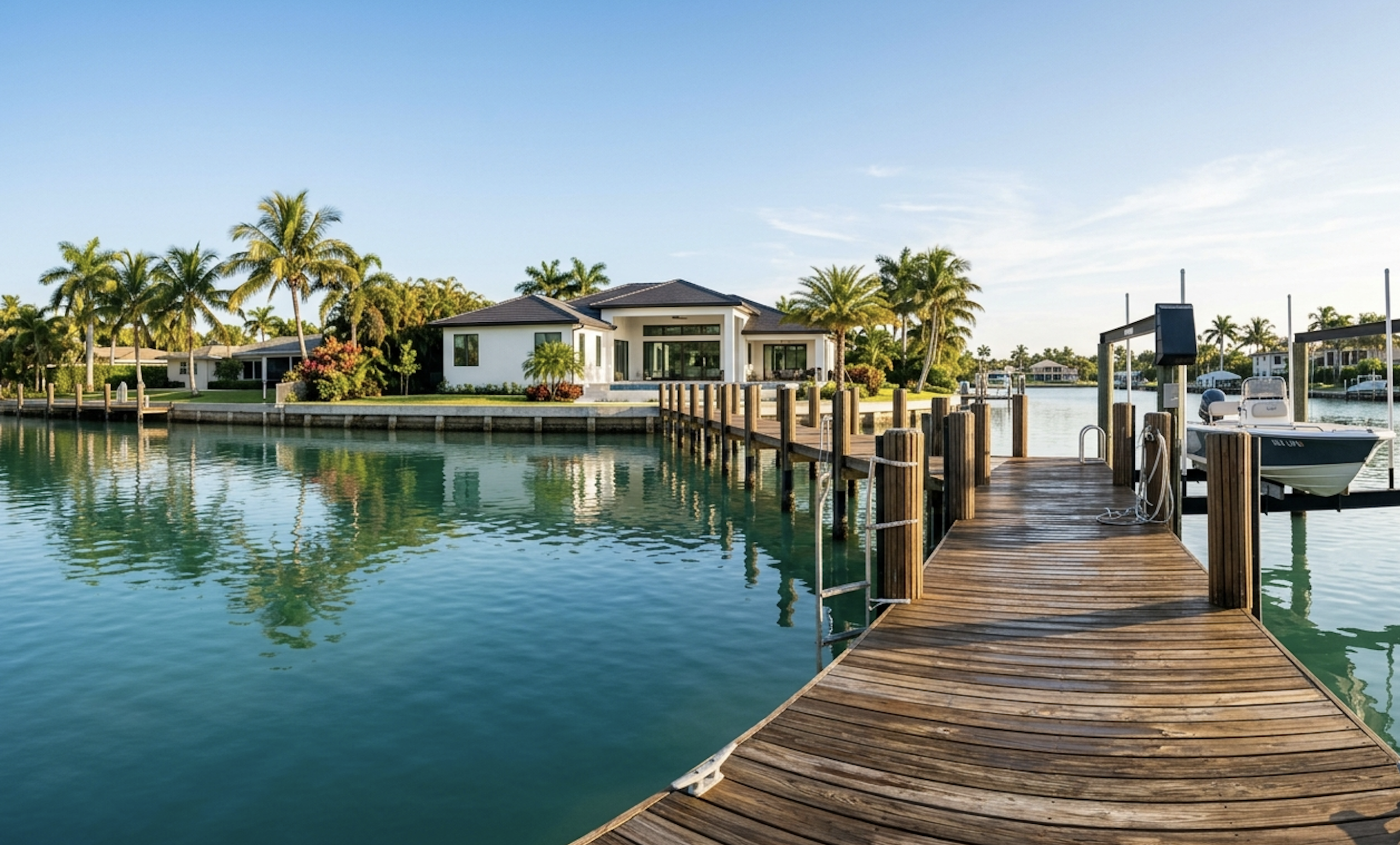
New Waterfront Property in South Florida? Here’s What You Need to Know About Your Dock
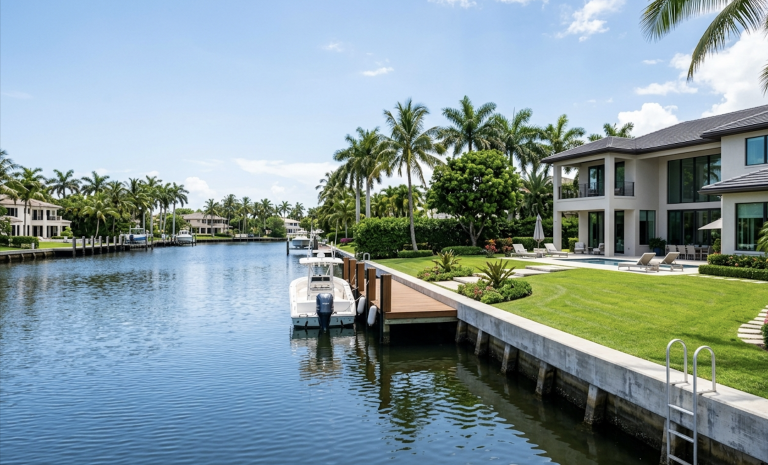
Buying a waterfront home in South Florida is exciting. The water view, the boat access, the lifestyle, it’s what draws people here in the first place. But there’s one part of the purchase that catches a lot of new owners off guard: the dock.
Docks don’t get the same attention as roofs or AC units during a home sale, but they should. A dock is a marine structure sitting in saltwater or brackish water, exposed to storms, tides, and marine borers year-round. If nobody’s inspected it properly, you could be inheriting a repair bill worth tens of thousands of dollars, or a structure that isn’t safe to use at all.
Here’s what to actually check before and after closing on a waterfront property in South Florida.
Get a Marine Inspection, Not Just a Home Inspection
Standard home inspectors walk the dock, take a few photos, and note if boards are loose. That’s about the extent of it. Most general home inspectors aren’t trained to evaluate pilings, wave action wear, or the condition of structural connectors below the waterline.
A marine-specific inspection goes further. It typically includes:
- Piling condition, both above and below the waterline
- Signs of marine borer damage in wood pilings
- Corrosion on metal hardware, bolts, and brackets
- Decking stability and rot
- Whether the dock was built to current wind load codes
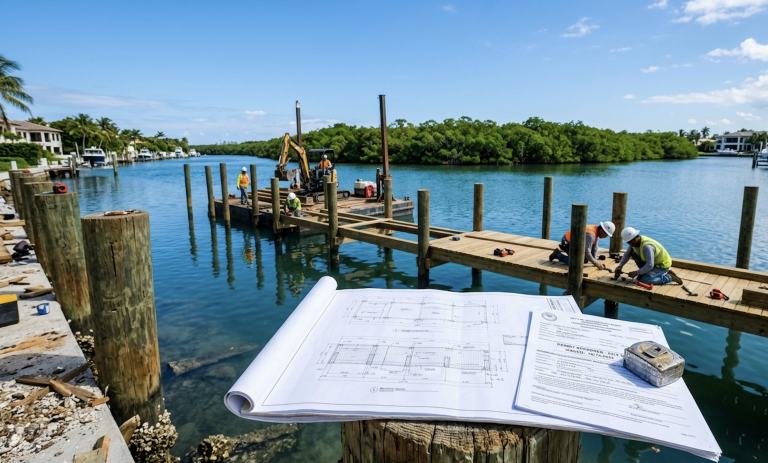
- Permit history with the local municipality or county
If the home you’re buying already has a dock, ask the seller for any prior permits or repair records. In Florida, dock permits are usually filed with the county or with the Florida Department of Environmental Protection, and older docks sometimes have no permit on file at all. That matters, because an unpermitted dock can complicate insurance, resale, and any future repair work.
Check Who Actually Owns the Dock
This sounds basic, but it trips people up constantly. Not every dock behind a waterfront home is owned outright by the property. Some sit on submerged land leased from the state. Some are shared structures with a neighbouring property. Some come with easement restrictions on width, length, or how far they can extend into the waterway.
Your title search should flag any of this, but it’s worth asking your real estate agent directly: is the dock fully owned, and are there any easements or shared-use agreements attached to it? Sorting this out before closing saves a lot of grief later.
Understand the Age and Material of the Dock
South Florida docks are usually built from one of three materials: pressure-treated wood, concrete, or a wood-concrete hybrid. Each ages differently in saltwater.
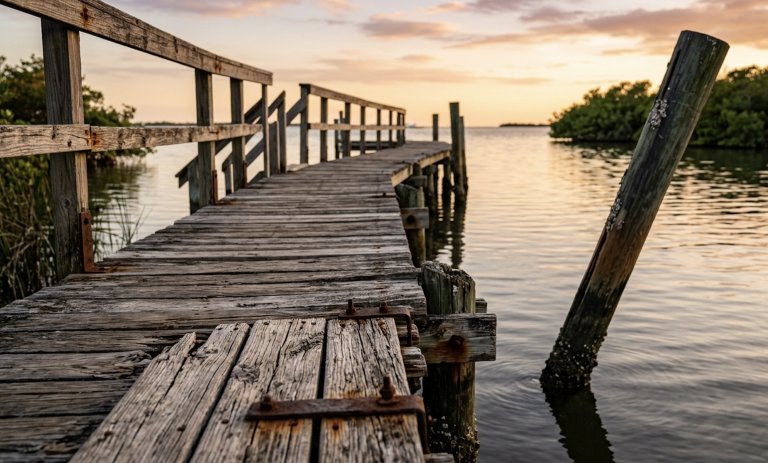
Wood pilings typically last 15 to 25 years depending on treatment and water conditions, though marine borer activity in warmer, saltier waters can shorten that. Concrete pilings tend to last longer, often 30 years or more, but they’re not immune to spalling, where saltwater corrodes the internal rebar and causes the concrete to crack and flake.
If the listing doesn’t specify when the dock was built or last repaired, ask. A dock built in the late 1990s or early 2000s that’s had no major work done is likely due for at least a partial rebuild soon, even if it looks fine from the surface.
Ask About Storm History
South Florida sees its share of tropical storms and hurricanes, and dock damage after a major storm is common, even when the damage isn’t obvious right away. Loosened pilings, hairline cracks in concrete, and weakened connectors can all result from storm surge and wave action without leaving visible signs for months.
If the property has been through a named storm in the past few years, it’s worth asking directly whether the dock was inspected afterward and whether any repairs were made. Insurance claims related to storm damage are also public record in many cases, so your agent or title company may be able to pull that history.
Factor Dock Condition Into Your Insurance and Budget
Waterfront property insurance in Florida is already a bigger line item than most buyers expect, and a dock in poor condition can push premiums higher or complicate coverage altogether. Some insurers will exclude dock coverage entirely if the structure hasn’t been inspected recently or doesn’t meet current code.
Before closing, it’s worth getting a repair estimate even if the dock looks usable. Knowing whether you’re looking at a $2,000 fix or a $40,000 rebuild changes how you negotiate, and it means no surprises in your first year of ownership.
What to Do If You’ve Already Closed
If you’re past closing and just realising the dock needs a closer look, don’t panic. The steps are the same, just after the fact:
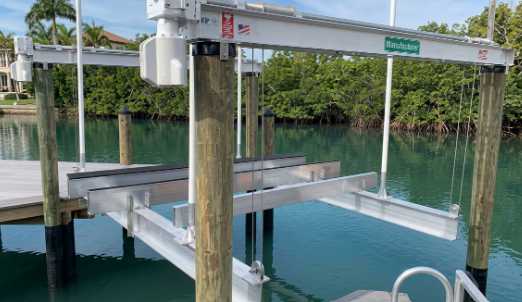
- Book a marine inspection as soon as possible, especially before putting a boat on a lift or using the dock heavily.
- Pull permit history from your county to confirm the dock was built and maintained legally.
- Get a repair estimate from a licensed marine contractor so you know what you’re working with.
- Check your homeowner’s or flood insurance policy to see what is and isn’t covered for dock damage.
The Bottom Line
A dock is one of the most expensive parts of a waterfront property to repair or replace, and it’s often the part buyers think about least. A proper marine inspection, a clear permit history, and an honest look at the structure’s age and condition can save you from a costly surprise down the line. If you’re not sure what you’re looking at, get a professional opinion before you assume the dock is fine.