12 Signs Your Dock Needs Repair (Before It Becomes a Safety Hazard)
South Florida docks live a hard life. Saltwater, tidal swings, marine borers, and hurricane season all chip away at a structure that looks solid from the yard but tells a different story underneath. Most dock failures do not happen overnight. They start small, a bit of give in a board, a piling that wobbles more than it used to, and get ignored until someone is standing on the dock when it finally lets go.
Here are the real warning signs South Florida dock owners run into, based on what waterfront homeowners, marine contractors, and boating forums actually report. If you spot two or three of these on your own dock, it is worth getting it looked at.
1. Pilings that wobble or shift side to side
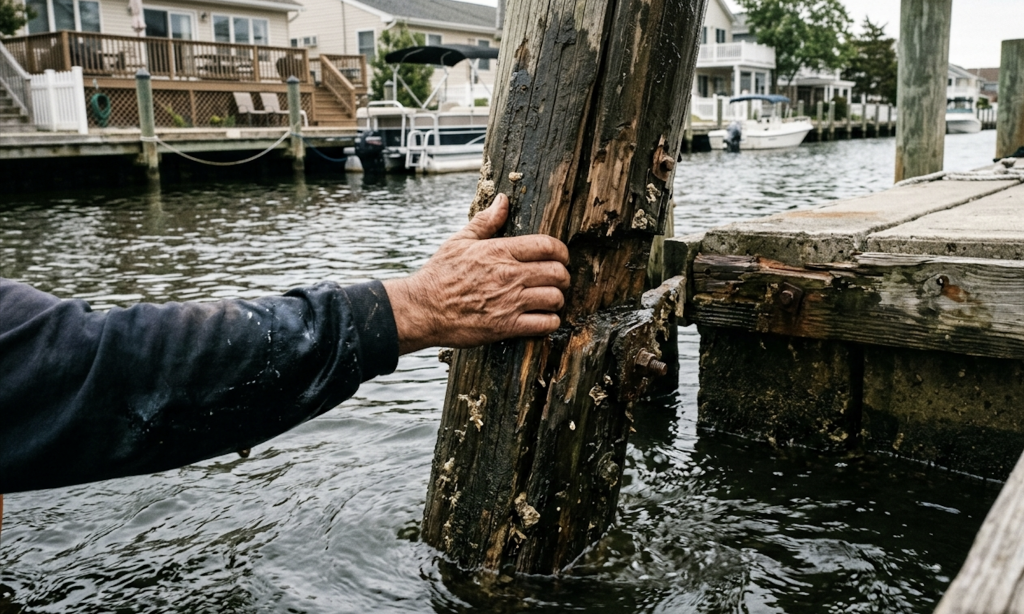
Give a piling a firm push. A little flex is normal, dock pilings are not meant to be rigid as concrete columns. But if it rocks noticeably, or you can wiggle it a few inches by hand, that is a sign the piling has lost its grip in the seabed or the connection hardware has failed. Boat owners on South Florida forums describe this exact problem after buying homes with older lifts, one piling sunk or loosened while the others held fine, which usually points to a soft spot in the bottom rather than a system-wide issue, though it still needs attention before it spreads.
2. A piling that has visibly sunk lower than the others
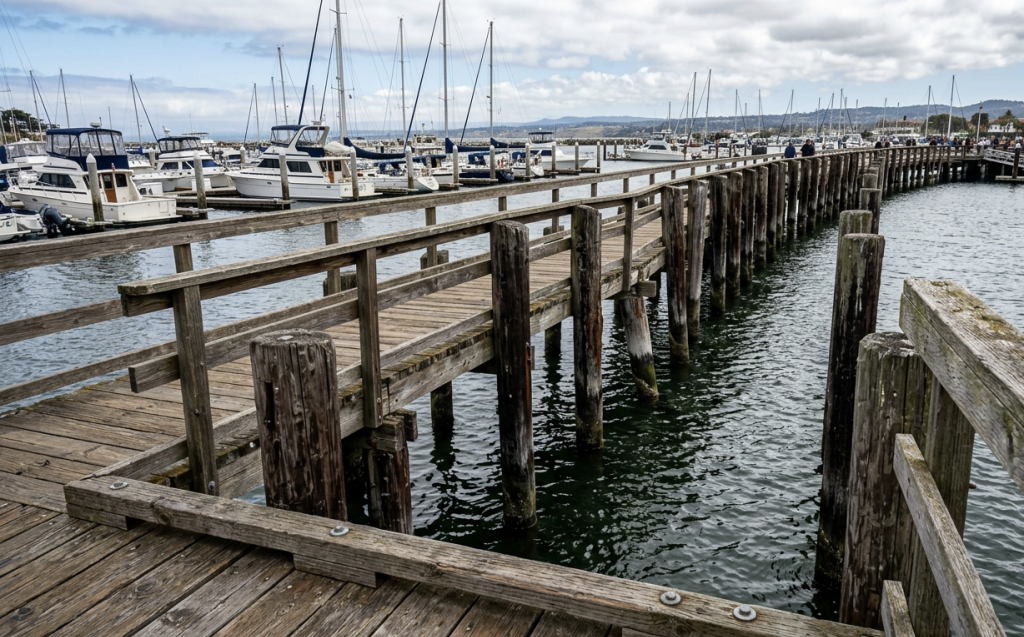
Walk the length of your dock and look at the pilings in a row. If one sits noticeably lower or higher than its neighbors, it has likely settled into a soft pocket in the bottom, sand, old sediment, or a void where the seabed simply could not hold that particular pile. This is common enough in South Florida that marine contractors have a name for the fix, a “soldier pile” driven alongside the sunken one and bolted together for support. It rarely fixes itself and tends to keep sinking if left alone.
3. Decking that feels soft, springy, or squishy underfoot
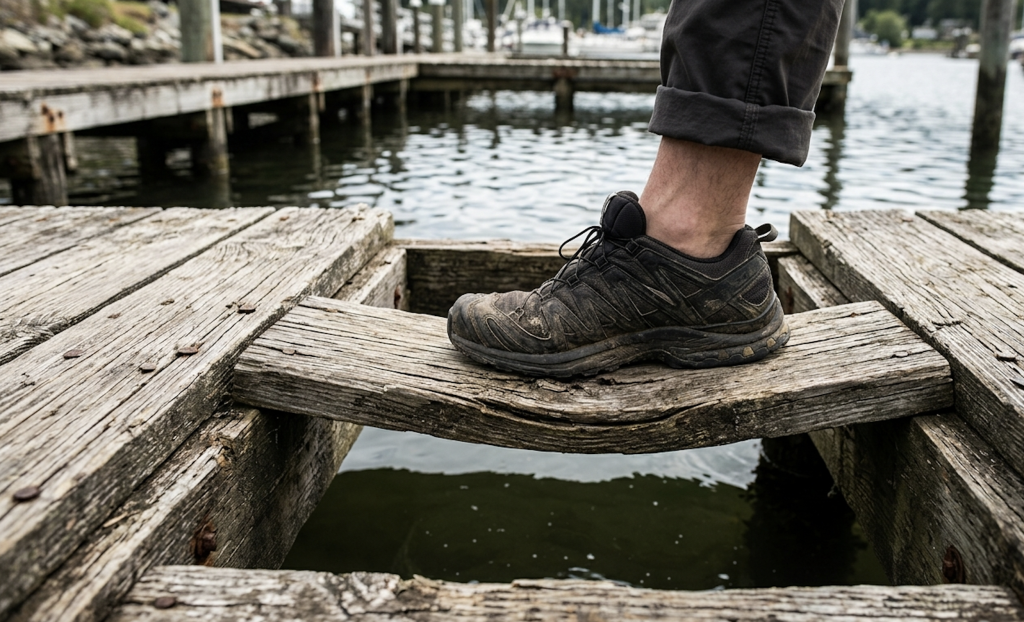
This is usually the first sign homeowners notice because they feel it, not see it. A spot that gives slightly when you step on it, almost like walking on a wet sponge, means water has worked its way into the wood and started breaking it down from the inside. The board can look completely fine on top while being structurally hollow underneath. If you find one soft spot, check the boards around it too, rot rarely stays contained to a single plank.
4. Wood turning black, grey, or crumbly
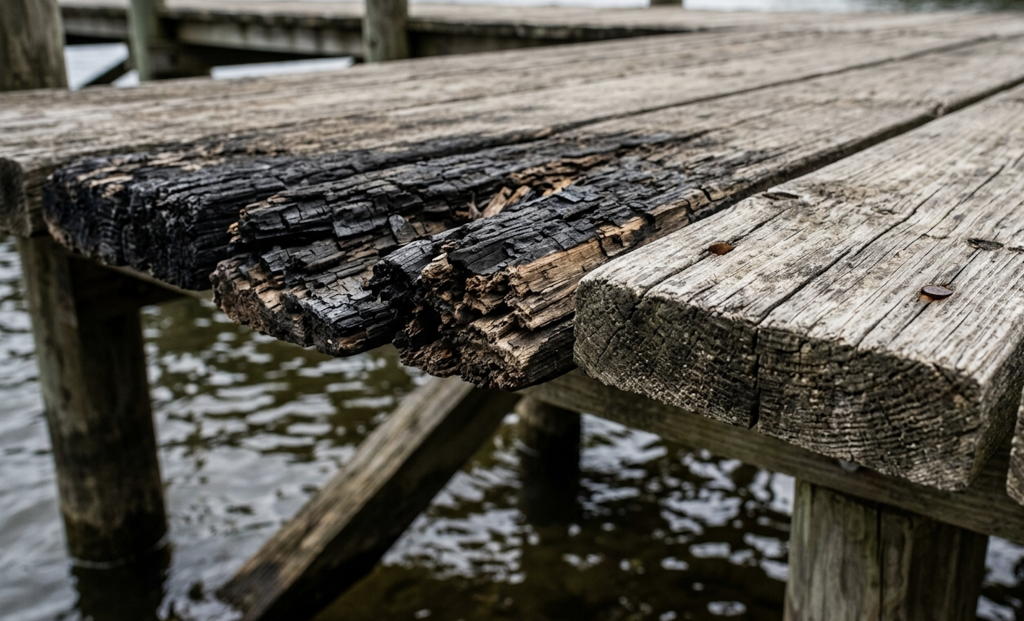
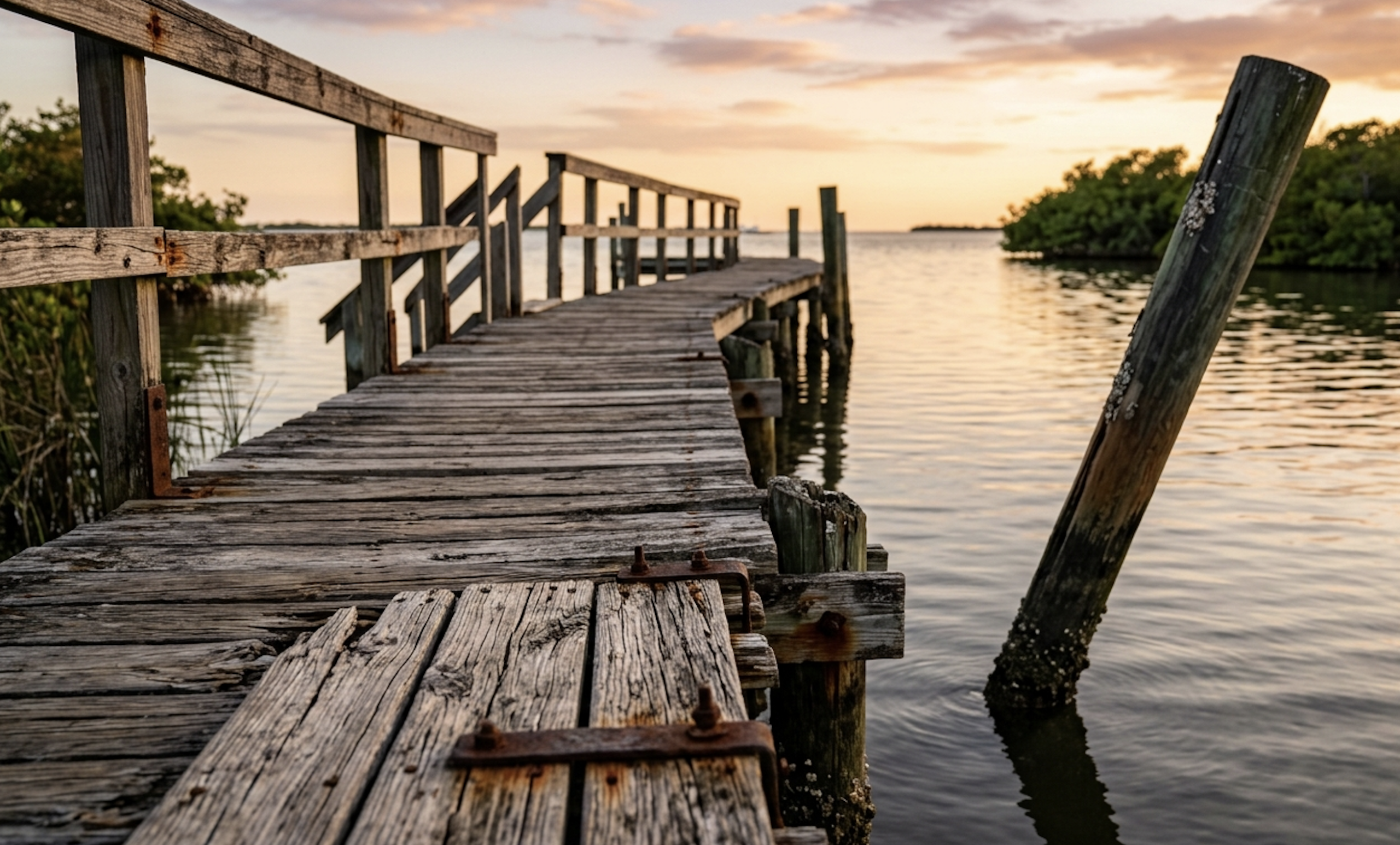
Untreated or aging wood exposed to standing water eventually darkens and starts to crumble at the edges. This is different from normal weathering or sun bleaching, which turns wood silvery-grey evenly across the surface. Rot shows up in patches, often near joints, fasteners, or spots where water pools and does not drain. Once the discoloration turns soft and crumbly to the touch, the board has already lost most of its strength even if it still holds your weight for now.
5. Cracks or splits running down a piling
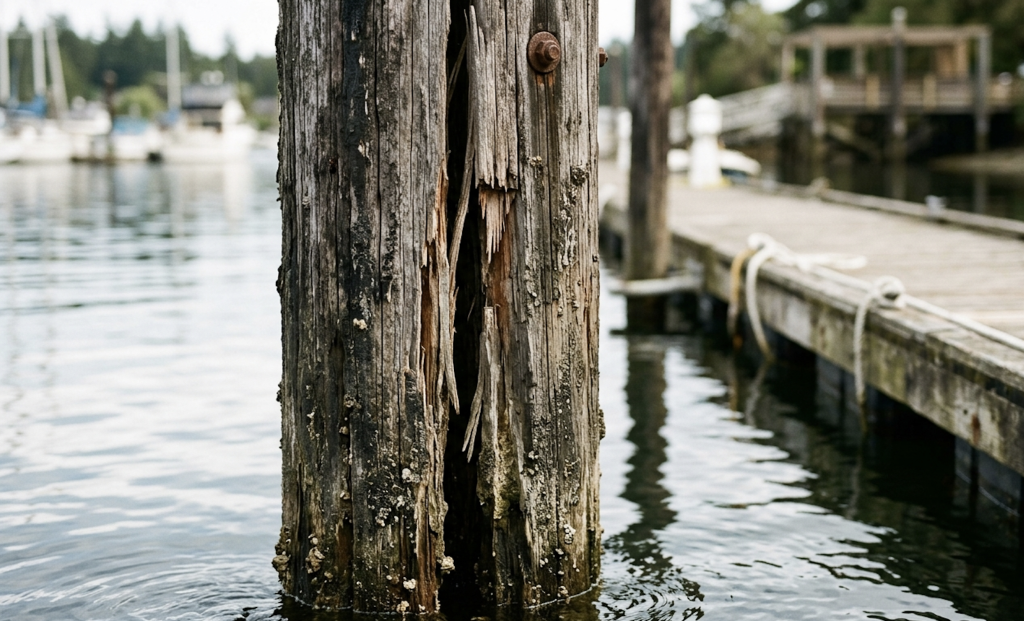
Wood pilings crack for a few reasons, sun exposure drying out the outer layer, an old boat impact, or internal rot pushing outward. A fine surface crack is often cosmetic. A deep split running the length of the piling, especially one you can fit a finger into, is a structural problem. Boaters recovering from storm damage in South Florida often describe finding split pilings only after a hurricane tested them, which is exactly why it pays to catch the crack before the storm does.
6. Heavy rot right at the waterline
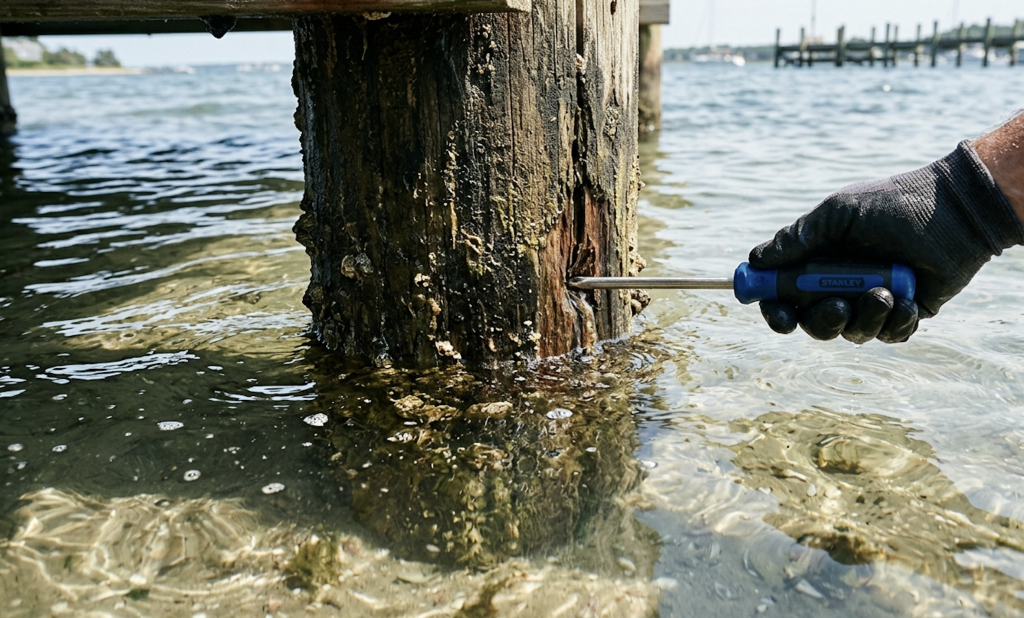
This is the spot marine contractors check first, and for good reason. Marine borers and rot organisms concentrate exactly where the piling transitions from wet to dry, the tide line. A piling can look perfectly solid a foot above the water and a foot below it, while the band in between is eaten through. The classic test boaters use is an ice pick or thin screwdriver pushed into the wood at the waterline, if it sinks in easily where the rest of the piling resists, that section has been compromised.
7. Heavy barnacle, mussel, or algae buildup on pilings and supports
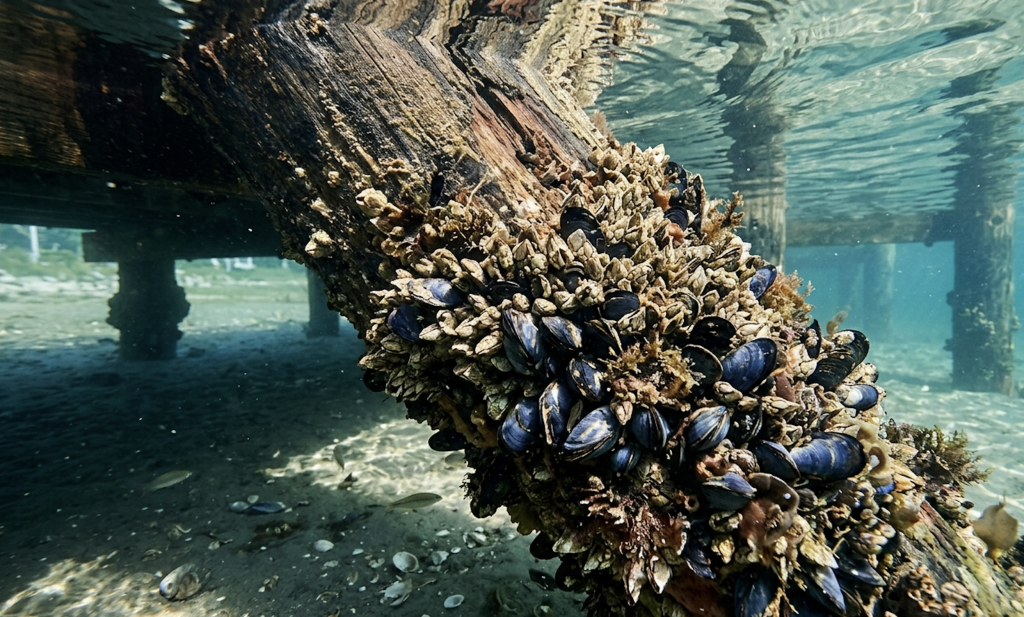
Some marine growth is normal and expected on anything sitting in saltwater. The problem is when it builds up thick enough to add real weight to the structure and trap moisture against the wood or metal underneath, which speeds up decay you cannot see. Barnacles and mussels also make pilings sharp enough to cause injury and harder to inspect properly, since you cannot check the wood condition through a crust of shells.
8. Rusted, corroded, or loose bolts and brackets
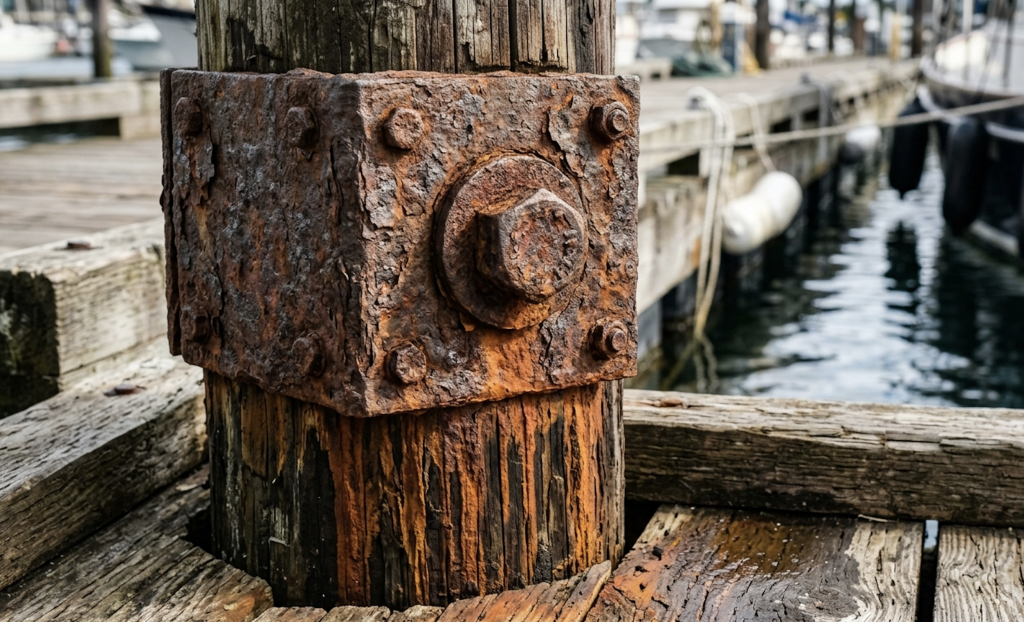
Metal hardware, brackets, bolts, and lift components takes a beating in salt air even when the wood around it looks fine. Rust streaks bleeding down from a bolt head, a bracket that has visibly thinned, or hardware that wiggles instead of sitting tight are all signs the connection is weaker than it looks. This matters most on boat lifts, where a corroded bracket under load is a very different problem than a corroded bracket on a stationary section of dock.
9. The dock leans or tilts to one side
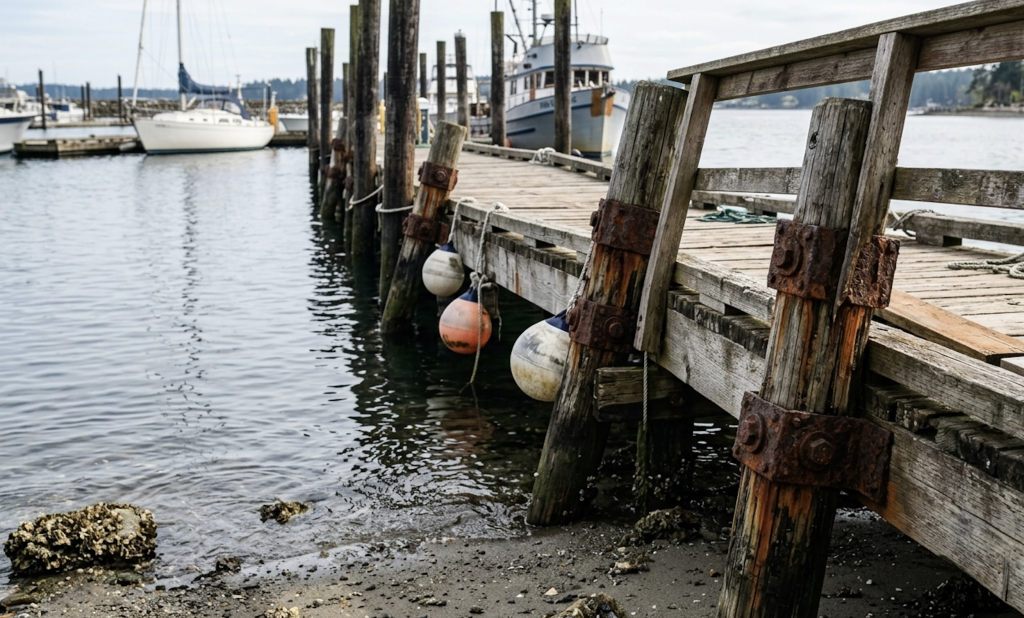
A dock that visibly tilts, where the far end sits noticeably lower or the whole walkway leans toward the water on one side, is telling you the support system underneath is no longer even. This usually traces back to one or more failing pilings, but it can also mean the framing itself has sagged. Either way, a lean rarely levels out on its own, and it tends to get more pronounced with every storm season that passes.
10. Sagging or bowing beams underneath the deck
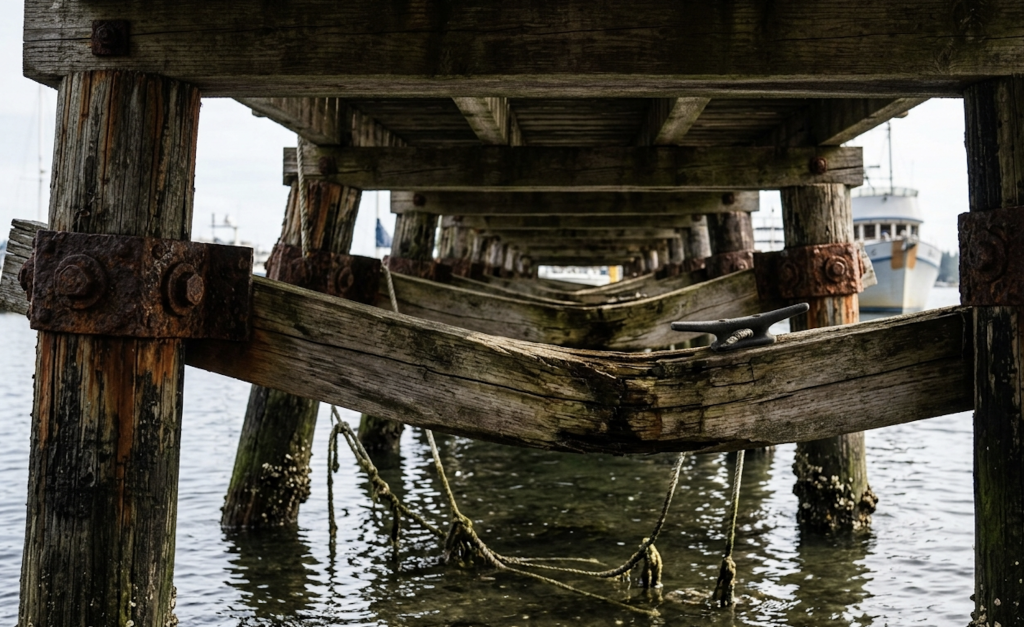
Get down and look at the framing from below, or from the water if you have a kayak or small boat. Joists and support beams should run straight. If they dip in the middle or bow downward between supports, the wood is losing its ability to carry weight, often from water intrusion or a piling settling unevenly. This is one of the signs that is easy to miss entirely because most people never look underneath their own dock.
11. Gaps opening up between the dock and the seawall or shoreline
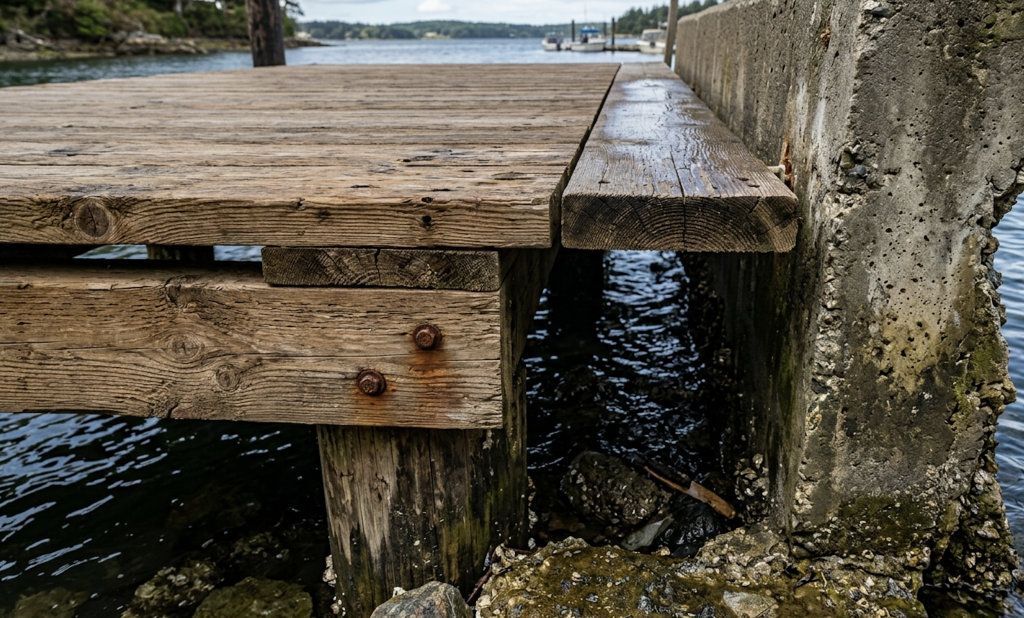
A dock is meant to sit snug against the seawall or land connection point. If you start seeing daylight or a widening gap where the two meet, something has shifted, either the dock has settled, the seawall has moved, or the connecting hardware has failed. This is also one of the more dangerous signs on the list, since a gap at the transition point is exactly where someone can catch a foot or fall through while stepping on or off the dock.
12. Visible storm damage that was never properly repaired
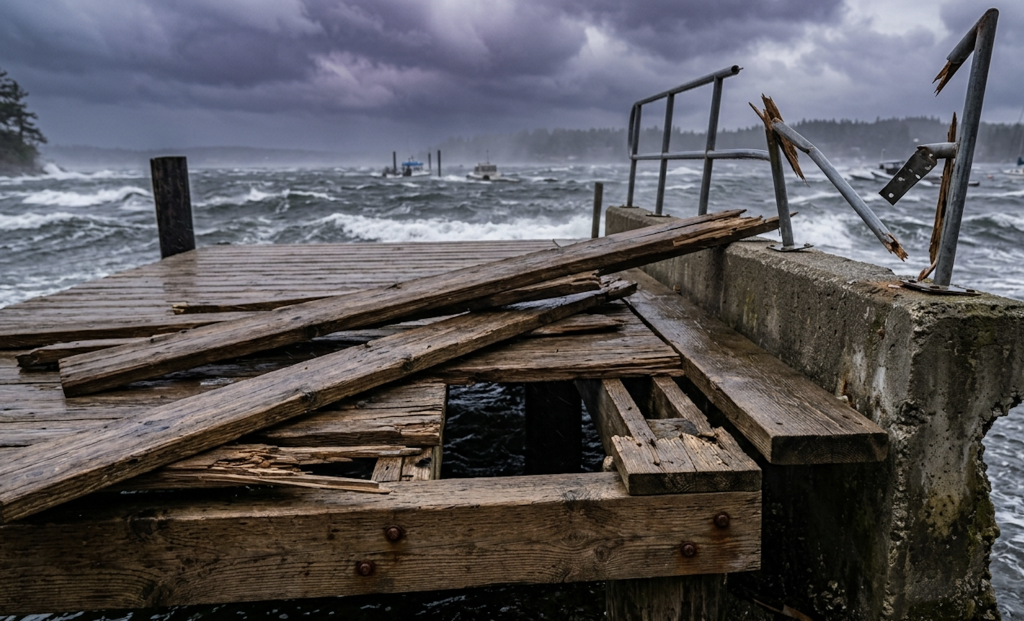
After a named storm or even a strong seasonal squall, it is common for a dock to take a hit, a missing section of railing, a cracked piling from a boat that broke loose, decking ripped up by storm surge. Some of this gets patched quickly because it is obvious. What often does not get addressed is the damage that is harder to see, hairline cracks in pilings, hardware knocked loose, framing stressed but not broken. If your dock went through a storm and only got a quick visual check afterward, it is worth a closer look, especially before the next season starts.
None of these signs mean your dock is about to collapse tomorrow. But every one of them is a data point, and dock problems in South Florida rarely stay small. The owners who avoid expensive emergency repairs are usually the ones who walked their dock, noticed something small, and got it checked out before the next storm season had a chance to make it worse.