How Much Does a Seawall Cost in South Florida? (2026 Pricing Guide)
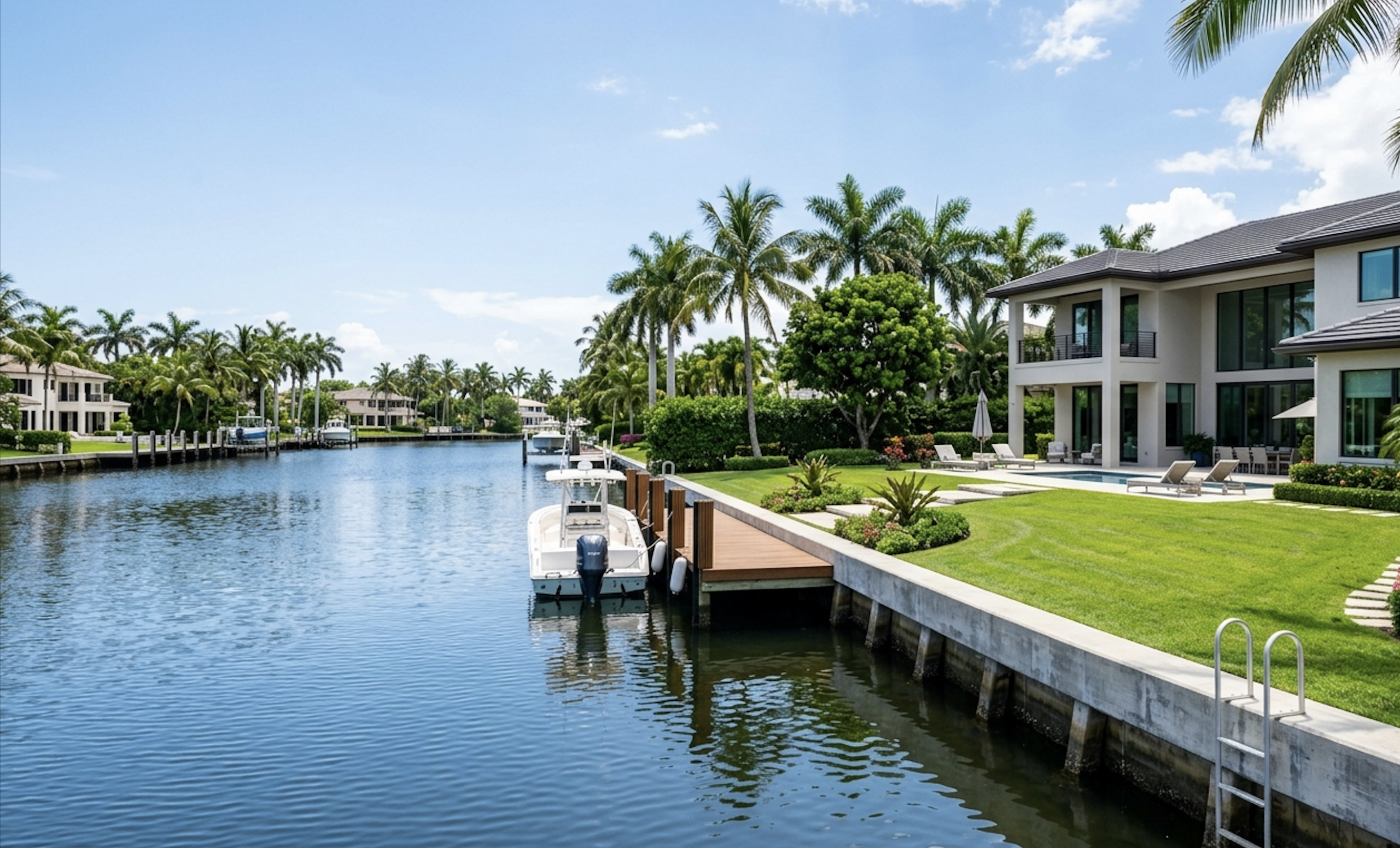
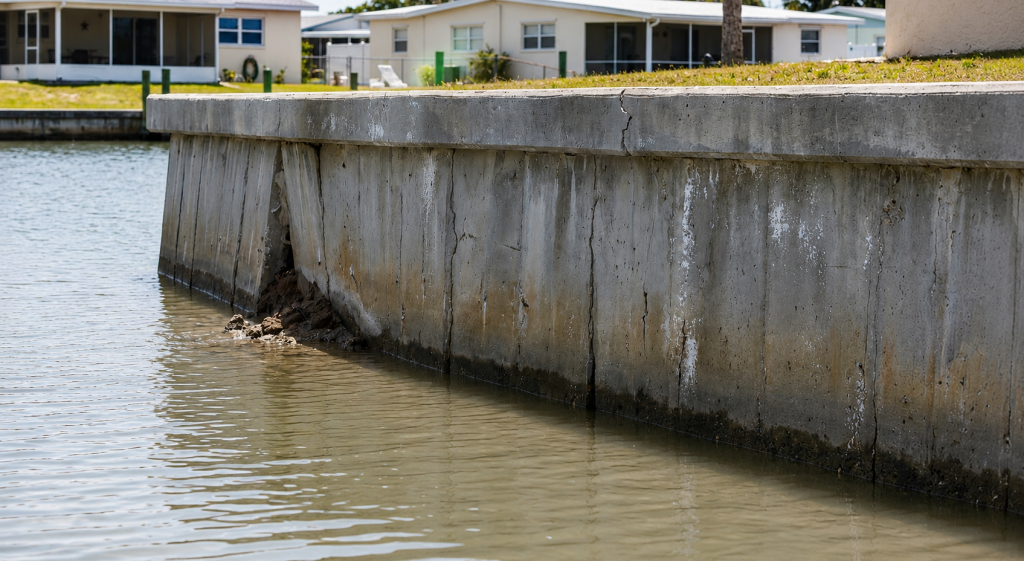
If you own waterfront property in South Florida, your seawall isn’t optional. It’s the one thing standing between your yard and the tide. So when it starts leaning, cracking, or letting soil wash out from behind it, the real question is how much fixing or replacing it is going to cost.
The honest answer: it depends, more than most pricing guides let on. Here’s a real breakdown, based on how these projects actually price out in Miami-Dade, Broward, and Palm Beach counties.
Seawall Cost Per Linear Foot in South Florida
Seawall projects are priced per linear foot, not per square foot or as a flat rate. National averages you’ll find online tend to run low for South Florida specifically, where labor, permitting, and demand push prices higher than in calmer inland markets.
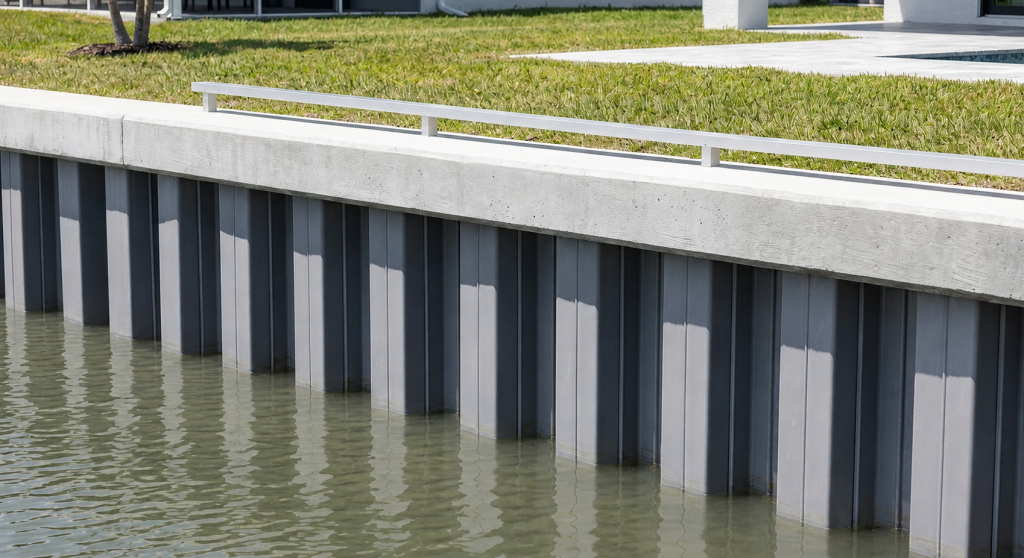
A realistic range for the region: vinyl seawalls run $400 to $800 per linear foot installed, sometimes climbing past $1,000 in high-demand areas or when paired with a concrete cap. Concrete seawalls run $500 to $1,000+ per linear foot, and can go considerably higher for a wall built to full commercial specs. Riprap (rock revetments) runs $150 to $400 per linear foot, but needs more shoreline space to work and isn’t always an option on a tight canal lot.
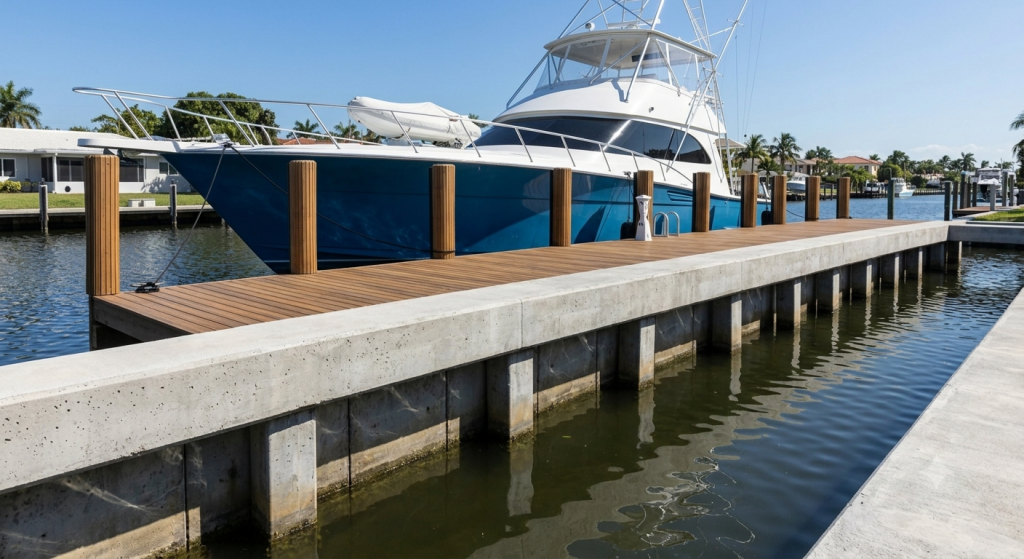
Homeowners comparing notes in South Florida boating communities regularly report quotes in the $500 to $1,250 per linear foot range for standard residential jobs, with concrete caps alone sometimes running over $1,000 per foot on their own. That’s a wide spread, and the reason it’s wide is that seawall cost isn’t really about the wall. It’s about everything underneath and around it.
What Actually Drives the Price
Material. Vinyl sheet piling is the most common choice for residential seawalls here because it resists saltwater corrosion and costs less upfront than concrete or steel. Concrete holds up better under heavy loads, like a dock or wide cap meant to bear foot traffic, but costs more. Steel shows up mostly on commercial and industrial jobs that need to handle serious structural pressure.
Wall height and water depth. A seawall holding back three feet of soil is a different job than one holding back eight. Deeper water and taller walls need longer sheet piles driven further into the substrate, more bracing, and more engineering, and that adds up fast.
Soil conditions. South Florida’s mix of sand, limestone, and muck isn’t consistent lot to lot, or even across one property. Soft or unstable soil often calls for tiebacks, deadman anchors, or helical anchors to keep the wall from shifting over time. This isn’t a place to cut corners. It’s the most common reason seawalls fail early.
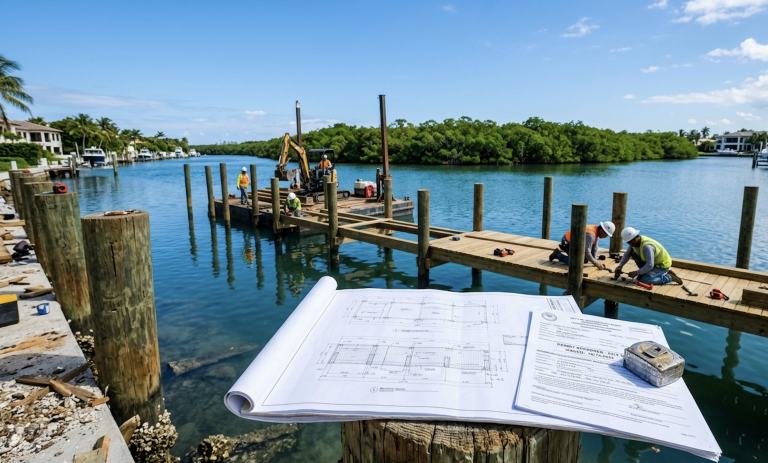
Permitting. Every seawall project touching state waters needs permits, and in most cases that means both a local municipal permit and state-level review through the Florida Department of Environmental Protection, sometimes alongside the Army Corps of Engineers. Requirements and turnaround times vary by county: Miami-Dade, Broward, and Palm Beach all handle seawall permitting slightly differently, so budget for it as a real line item and expect review to take anywhere from a few weeks to a few months.
Access. Can equipment reach the site directly, or does it need to come in by barge? Tight side-yard access or no road frontage to the water usually adds cost, since materials and machinery have to move differently.
Demolition and removal. If there’s an existing seawall failing, removing it adds cost before the new one even goes in. This is the most common scenario in older South Florida neighborhoods, where seawalls built in the 60s, 70s, and 80s are reaching the end of their working life.
Seawall Replacement Cost vs. New Construction
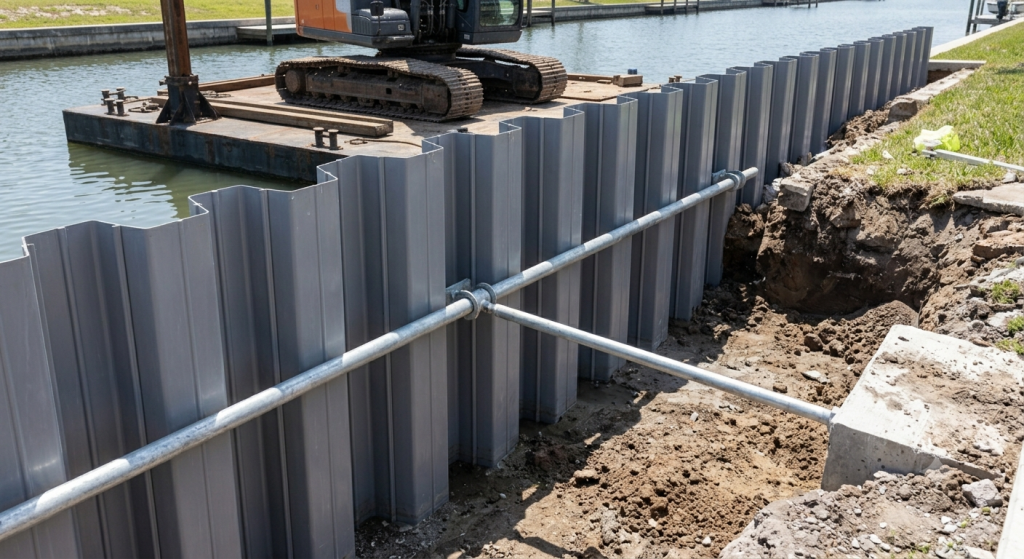
Replacing a seawall typically costs 10 to 20% more than building on a clean shoreline, because of the extra steps: removing the old structure, addressing soil disturbance from the failure, and sometimes repairing yard or dock damage that happened along the way.
Waiting on a failing seawall almost always costs more in the long run. Once erosion starts pulling soil out from behind a cracked or leaning wall, it’s not just the wall at risk anymore. Yard subsidence and dock instability follow, and in bad cases, structures built close to the water line take on real risk too.
The Bottom Line
Every property is different, and the only way to get a real number, not a ballpark, is a site visit. Soil conditions, water depth, existing structure condition, and county-specific permitting requirements all factor in, and none of that shows up in a phone estimate. Get quotes from a few licensed, insured marine contractors, ask each one to walk through their pricing line by line, and be wary of any quote that’s dramatically lower than the others without a clear explanation why.